Resources

Gravel Driveway Guide: Best Materials for Your Drive

What makes a driveway gravel work, how much your drive needs, and how to get a straight price for your project.
Not all gravel makes a good driveway. Some materials pack down into a hard, stable surface that sheds water and holds up to truck and trailer traffic. Others stay loose, rut out and wash away in the first hard rain. This guide walks through what makes driveway gravel work, how the base and top layers fit together, how much material a typical drive needs, and how to get a straight price on your project.

What Makes a Good Driveway Gravel?

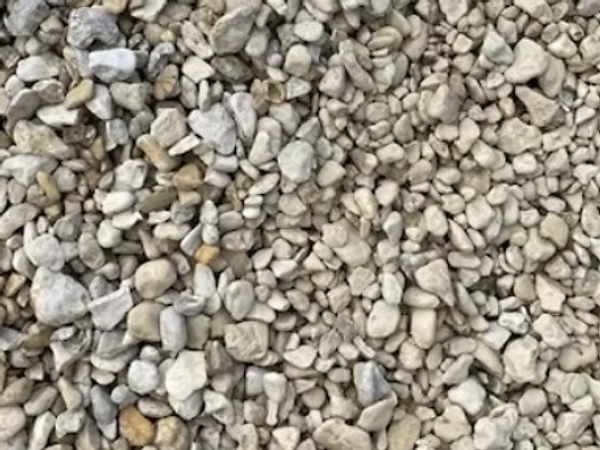
A good driveway material needs three things. It has to compact into a solid surface instead of staying loose underfoot or under tires. It needs a mix of particle sizes, from fine dust down to larger stone, so the pieces lock together instead of rolling around. And it needs to shed water instead of holding it, so the drive does not turn to mud or wash out in a storm. Crushed materials with angular edges, like asphalt milling and flexbase, compact and lock together far better than smooth, rounded gravel like pea gravel or river rock.
The Layered Approach: Base and Top Material

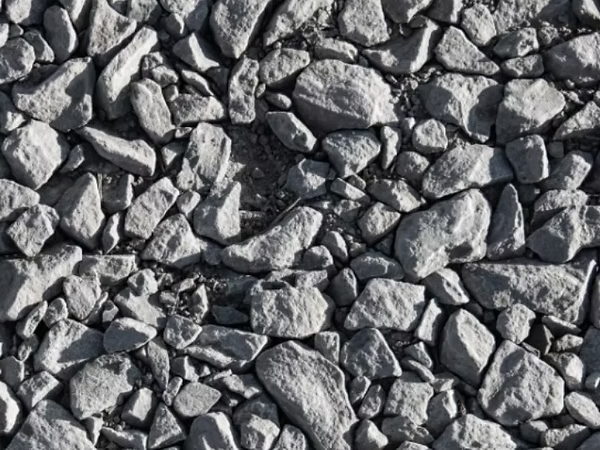
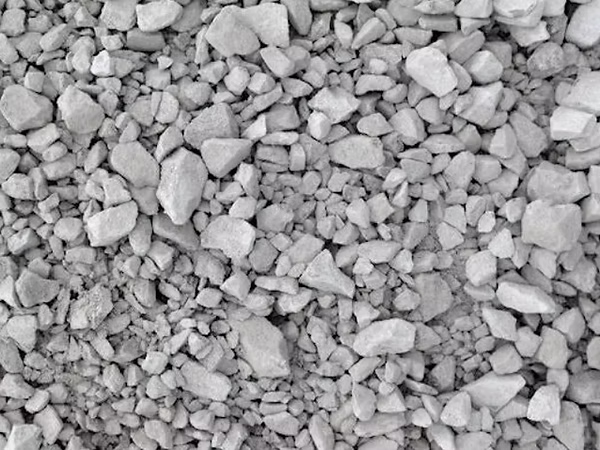
A common approach for a gravel driveway is to build it in two layers. The base layer is a coarser material like flexbase, compacted down to give the drive a stable foundation that will not shift under weight. The top layer is a finer material like asphalt milling, spread over the base and compacted to give the surface a smooth, driveable finish. Skipping the base layer and pouring a single layer of decorative gravel straight onto dirt is the most common reason driveway gravel sinks, ruts and disappears into the ground within a season.
Materials

Comparing Driveway Gravel
Materials

Material
Price
Best For
Notes
Asphalt Milling
Call for current pricing

Base or top layer, high-
traffic drives

Packs hard, budget-friendly, dark color

Flexbase

Call for current
pricing

Base layer

Engineered blend of crushed stone and fines for a stable foundation

Gravel 1″

Call for current
pricing

Low-traffic paths, not
main drives

Smooth and rounded, so it migrates and shifts under vehicle weight. Better suited to walkways and low-traffic paths than a daily-use driveway.

How Much Gravel Does My Driveway Need?

Start with length times width to get square footage, then use depth to convert to cubic yards. A typical single-car driveway 12 feet wide and 60 feet long is 720 square feet. At 4 inches deep, the math is 12 x 60 x (4 / 12) / 27, which works out to about 8.9 cubic yards, so plan on 9 cubic yards. Wider drives, longer drives or a thicker base layer will need more. Use our cubic yard calculator to run the numbers for your own driveway.

Try the Cubic Yard Calculator →

What Does a Gravel Driveway Cost?

Material cost depends on which material you choose and how many cubic yards your driveway needs. For the 720 square foot example above, that works out to about 9 cubic yards, whether you go with asphalt milling, flexbase or another material. Delivery is priced by material and distance, and it is free on orders of 5 cubic yards or more within 10 miles of our Justin yard. Call 817-940-6700 with your address and the yardage you need, and we will give you a straight quote on material and delivery.

How Do I Maintain a Gravel Driveway?

A gravel driveway needs light upkeep to stay solid. Regrade it about once a year to redistribute material that has migrated to the edges and smooth out ruts. Top up low spots as they appear, especially after heavy rain, instead of waiting until the whole drive needs redoing. A driveway built with a proper base layer and compacted correctly needs far less maintenance than one poured straight onto dirt.

Ready to Order?

Call today for a quote on your next load of topsoil.
Scroll to Top