
Cubic Yard Calculator
What Is a Cubic Yard?
A cubic yard is 27 cubic feet: a cube 3 feet long, 3 feet wide and 3 feet tall. It’s the unit gravel, topsoil and base material are sold and delivered by. To get cubic yards, multiply length × width × depth (all in feet) and divide by 27. One yard spread 3 inches deep covers about 108 square feet.
Reviewed by [Redhawk Team] · Last updated [15/10/2026]
How Many Cubic Yards Do I Need?
The math behind it: length (ft) × width (ft) × depth (in) ÷ 12 ÷ 27 = cubic yards. Stuck on the numbers? Call 817-940-6700 and we'll work it out with you.
| Depth | 100 sq ft | 200 sq ft | 500 sq ft | 1,000 sq ft |
|---|---|---|---|---|
| 2" deep | 1 yard | 1.5 yards | 3.5 yards | 6.5 yards |
| 3" deep | 1 yard | 2 yards | 5 yards | 9.5 yards |
| 4" deep | 1.5 yards | 2.5 yards | 6.5 yards | 12.5 yards |
| 6" deep | 2 yards | 4 yards | 9.5 yards | 19 yards |
| 8" deep | 2.5 yards | 5 yards | 12.5 yards | 25 yards |
| 12" deep | 4 yards | 7.5 yards | 19 yards | 37.5 yards |
- We've rounded up to the nearest half yard. Running a little over is cheaper than paying for a second trip.
- Spreading gravel or flexbase you'll compact? Add roughly 10 to 15% on top. Base packs down once it's rolled.
- Bigger job than this table covers? Use the calculator above, or check the larger-area chart further down this page.
Cubic Yard Conversions
How Many Cubic Feet Are in a Cubic Yard?
27. A yard is 3 feet each way, and 3 × 3 × 3 = 27. So to turn cubic feet into cubic yards, divide by 27; to go the other direction, multiply by 27. A 54-cubic-foot pile is 2 yards. Half a yard is 13.5 cubic feet.
How Do I Convert Square Feet to Cubic Yards?
Square feet only gives you the area, so you’ll need a depth before you can get a volume. Multiply the square footage by the depth in inches, divide by 12, then divide by 27. A real one: a 3,000 sq ft pad at 4 inches is 3,000 × 4 ÷ 12 ÷ 27 = 37.04, so you’d order 37.5 yards.
| Area | 2" deep | 3" deep | 4" deep | 6" deep |
|---|---|---|---|---|
| 1,500 sq ft | 9.5 yards | 14 yards | 19 yards | 28 yards |
| 2,000 sq ft | 12.5 yards | 19 yards | 25 yards | 37.5 yards |
| 3,000 sq ft | 19 yards | 28 yards | 37.5 yards | 56 yards |
| 5,000 sq ft | 31 yards | 46.5 yards | 62 yards | 93 yards |
How Much Does a Cubic Yard Cover?
It comes down to depth. One yard covers about 162 square feet at 2 inches, 108 at 3 inches, 81 at 4 inches and 54 at 6 inches. Quick shortcut: divide 324 by your depth in inches and you’ve got square feet per yard.
| Depth | Coverage per cubic yard |
|---|---|
| 2" deep | ~162 sq ft (was ~160) |
| 3" deep | ~108 sq ft (was ~100) |
| 4" deep | ~81 sq ft (was ~80) |
| 6" deep | ~54 sq ft |
| 8" deep | ~40 sq ft |
| 12" deep | ~27 sq ft |
What Depth Should I Use?
Depends on what’s going down and what it has to hold up. These are the depths that work on most jobs around Justin and Denton County:
| Project | Typical depth |
|---|---|
| Mulch beds | 2–3" |
| Gravel paths and walkways | 2–3" |
| Gravel driveway top layer | 3–4" |
| Asphalt millings driveway | 3–4" |
| New lawn (topsoil under sod or seed) | 4–6" |
| Flexbase under a driveway | 4–6", 8" or more for trucks and trailers |
| Garden and flower beds | 6–12" |
A driveway that sees a dually and a stock trailer needs more base than one that sees a sedan twice a day. Not sure what yours needs? Ask before you order.
How Big Is 2, 3 or 5 Cubic Yards?
Picture one yard as a 3-foot cube. Two yards is two of those side by side, roughly a 6 × 3 × 3 pile, and three yards stretches it to about 9 × 3 × 3. Five yards matters for another reason: it’s where free delivery kicks in if you’re within 10 miles of our Justin yard. Here’s what each amount covers once it’s spread:
| Cubic yards | 2" deep | 3" deep | 4" deep | 6" deep |
|---|---|---|---|---|
| 1 | 162 sq ft | 108 sq ft | 81 sq ft | 54 sq ft |
| 1.5 | 243 sq ft | 162 sq ft | ~122 sq ft | 81 sq ft |
| 2 | 324 sq ft | 216 sq ft | 162 sq ft | 108 sq ft |
| 2.5 | 405 sq ft | 270 sq ft | ~203 sq ft | 135 sq ft |
| 3 | 486 sq ft | 324 sq ft | 243 sq ft | 162 sq ft |
| 3.5 | 567 sq ft | 378 sq ft | ~284 sq ft | 189 sq ft |
| 5 | 810 sq ft | 540 sq ft | 405 sq ft | 270 sq ft |
| 6 | 972 sq ft | 648 sq ft | 486 sq ft | 324 sq ft |
| 10 | 1,620 sq ft | 1,080 sq ft | 810 sq ft | 540 sq ft |
How Much Does a Cubic Yard Weigh?
More than most people expect. Rock and base are the heavy ones, at roughly 1.2 to 1.5 tons a yard, while mulch barely registers next to them. Wet material weighs more than dry, so treat these as planning numbers:
| Material | Approx. weight per cubic yard |
|---|---|
| 1" gravel | 2,400–2,900 lbs (1.2–1.45 tons) |
| Flexbase / road base | 2,600–3,000 lbs (1.3–1.5 tons) |
| Asphalt millings | 2,000–2,400 lbs (1–1.2 tons) |
| Screened topsoil | 2,000–2,400 lbs dry (1–1.2 tons) |
| Fill dirt | 2,000–2,600 lbs (1–1.3 tons) |
| Mulch | 400–800 lbs |
To get from cubic yards to tons, multiply by the weight per yard. Ten yards of flexbase at about 1.4 tons a yard comes to around 14 tons. It’s also why material is sold by the yard rather than by weight: the same yard of topsoil weighs more after a rain.
Planning to haul it yourself? A half-ton pickup is usually rated for somewhere around 1,500 to 2,000 lbs of payload, so a single yard of gravel can max it out.
Bags or Bulk?
Big-box bags are sold in cubic feet. Here’s how many it takes to make one yard:
| Bag size | Bags per cubic yard |
|---|---|
| 0.5 cu ft | 54 |
| 0.75 cu ft | 36 |
| 1 cu ft | 27 |
| 1.5 cu ft | 18 |
| 2 cu ft | 13.5 |
Under half a yard, bags are fine. Past a yard or so you’re loading, hauling and slitting open a few dozen of them, and a delivered load starts looking a lot better.
Order Gravel, Topsoil and Base by the Yard
Know how many yards you need? Call us or pick a material below. Most orders go out the same day, and loads of 5 yards or more are delivered free within 10 miles of Justin.
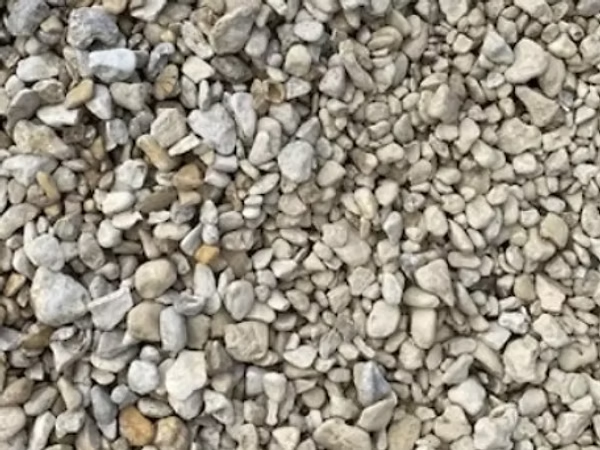
Gravel 1"
Crushed 1-inch gravel for driveways and drainage. A yard covers about 108 sq ft at 3 inches. Call for current pricing.
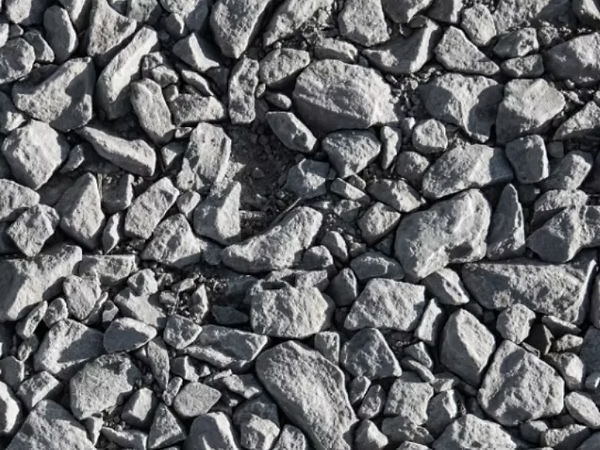
Asphalt Milling
Recycled asphalt that packs down hard under driveways and base layers. Call for current pricing.
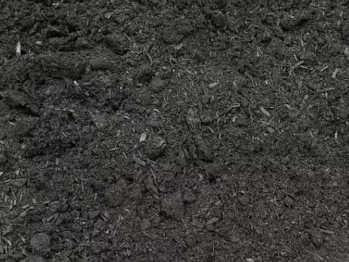
Screened Topsoil
Screened and ready for new lawns, beds and finish grading. Call for current pricing.
Cubic Yard FAQ
Measure length and width in feet and depth in inches. Multiply length × width × depth, divide by 12, then divide by 27. A 20 × 10 ft area at 3 inches deep is 20 × 10 × 3 ÷ 12 ÷ 27 = 1.85, so order 2 yards.
Yes. A cube 3 feet on every side is exactly one cubic yard, or 27 cubic feet.
It depends on the material. Mulch and fill dirt sit at the low end, and decorative rock and limestone at the high end. Delivery depends on distance. Call 817-940-6700 for today’s price on what you need.
A typical tandem-axle dump truck carries around 10 to 14 yards by volume. With heavy material like gravel or flexbase, the weight limit usually caps the load before the bed fills up.
Maybe, but check your payload rating first. A yard of gravel runs roughly 2,400 to 2,900 lbs, which is more than many half-ton trucks are rated to carry.
For gravel and road base, roughly 1.2 to 1.5 tons. Topsoil and fill dirt run closer to 1 to 1.3 tons, and mulch is a fraction of that.
A little, yes. Round up to the next half yard, and add about 10 to 15% for base you’re going to compact. Coming up short and paying for a second delivery costs more than a few extra feet of material.
Yes, across Denton County and North Fort Worth. Loads of 5 yards or more are free within 10 miles of our Justin yard, and most orders go out the same day you call.